
Physician-performed laser treatment for warts
Common skin warts are caused by human papillomaviruses, are contagious and may also resolve spontaneously. When they are painful, bothersome, spreading or resistant to other measures, physician-selected laser treatment may be considered. It treats visible wart tissue but does not guarantee elimination of the underlying viral infection.
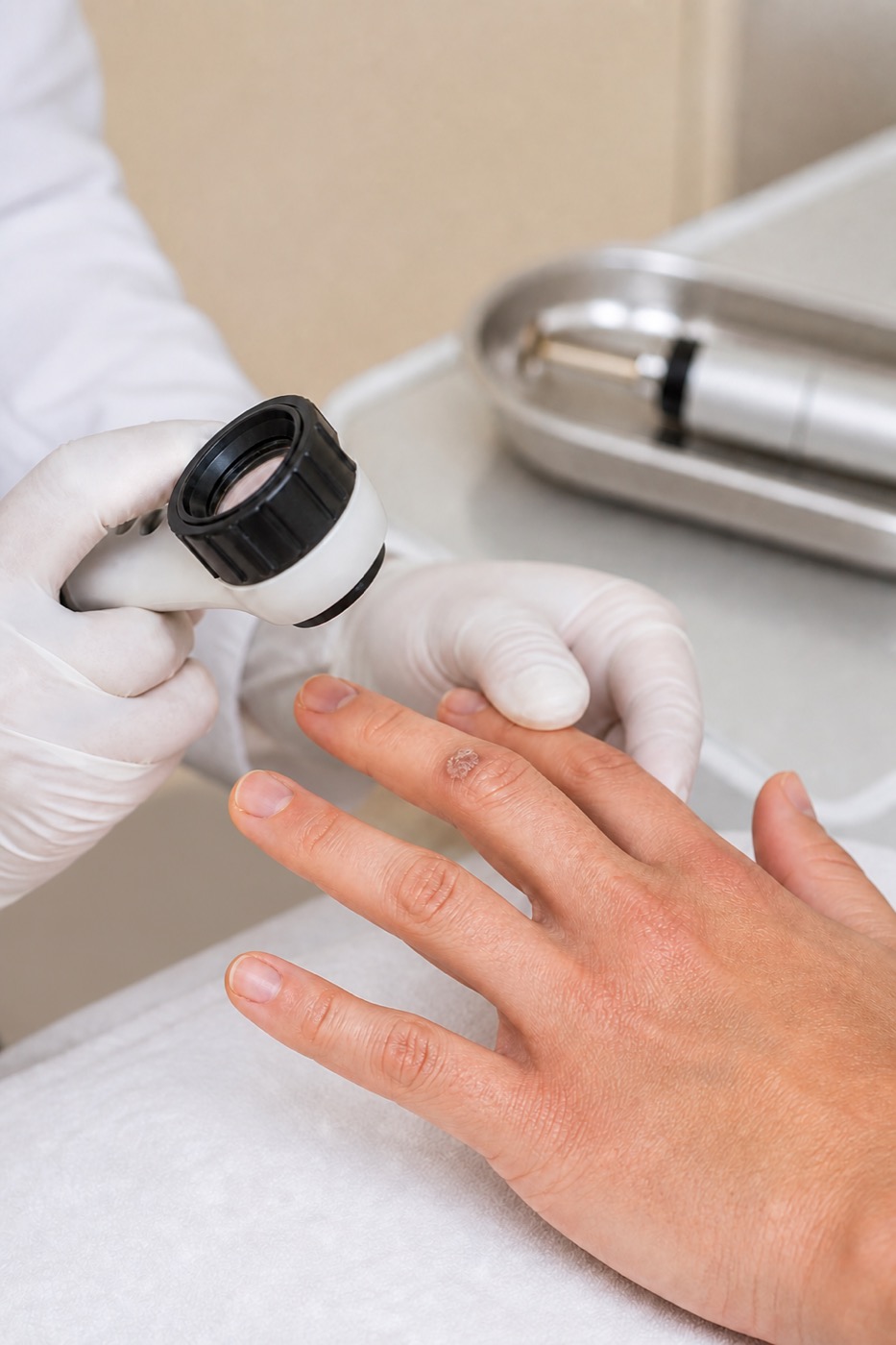
Diagnosis and suitability
Diagnosis is usually based on examination and, where needed, dermoscopy. Location, number, size and symptoms, as well as diabetes, immunosuppression and previous treatments, are considered. Rapidly growing, bleeding, ulcerated, pigmented or otherwise unclear lesions require further assessment before laser treatment. Warts in the genital area require a separate medical care pathway.
Laser treatment process
Depending on the wart and laser system, treatment may target its blood supply or remove wart tissue. After cleansing and, where appropriate, local anaesthesia, settings are adapted to location, thickness and skin type. Several sessions may be needed, particularly for resistant plantar warts. Alternatives such as salicylic acid, cryotherapy or physical removal are included in the decision.
Wound care and reducing transmission
The area may be sore, bleed, discolour or develop a blister or crust. Clean, protect and avoid picking it as instructed. Because warts are viral, wash your hands after touching one and do not share towels, razors, nail tools or footwear. Follow the individual advice on dressings, exercise, swimming and pressure on the area until it heals.
Outcomes and possible risks
Warts may return despite treatment; removing visible tissue does not guarantee permanent clearance of the virus. Spontaneous resolution is also possible. Risks include pain, temporary purpura, bleeding, blisters, crusting, infection, lighter or darker pigmentation and scarring. Treatment near a nail can also affect nail growth.