
Botulinum toxin for hyperhidrosis and medical indications
Botulinum toxin can temporarily inhibit nerve signals that activate sweat glands or selected muscles; chronic migraine uses a separate standardised head-and-neck protocol. Hyperhidrosis, bruxism and chronic migraine are distinct conditions, each requiring its own diagnosis, treatment pattern and risk-benefit assessment.
Diagnosis, suitability and approval status
For excessive sweating, assessment first distinguishes primary focal hyperhidrosis from sweating caused by another condition or medication. In Germany, one product is licensed for severe underarm sweating when local treatments have not helped sufficiently; treatment of the palms or soles is off-label. Botulinum toxin for bruxism is also generally off-label and requires dental or orofacial assessment. Chronic migraine treatment requires a specialist neurological diagnosis - at least 15 headache days per month, including at least 8 migraine days, with an insufficient response to preventive medicines - and neurological supervision. Neuromuscular disorders, infection, medication, pregnancy and breastfeeding are also considered.
An indication-specific procedure
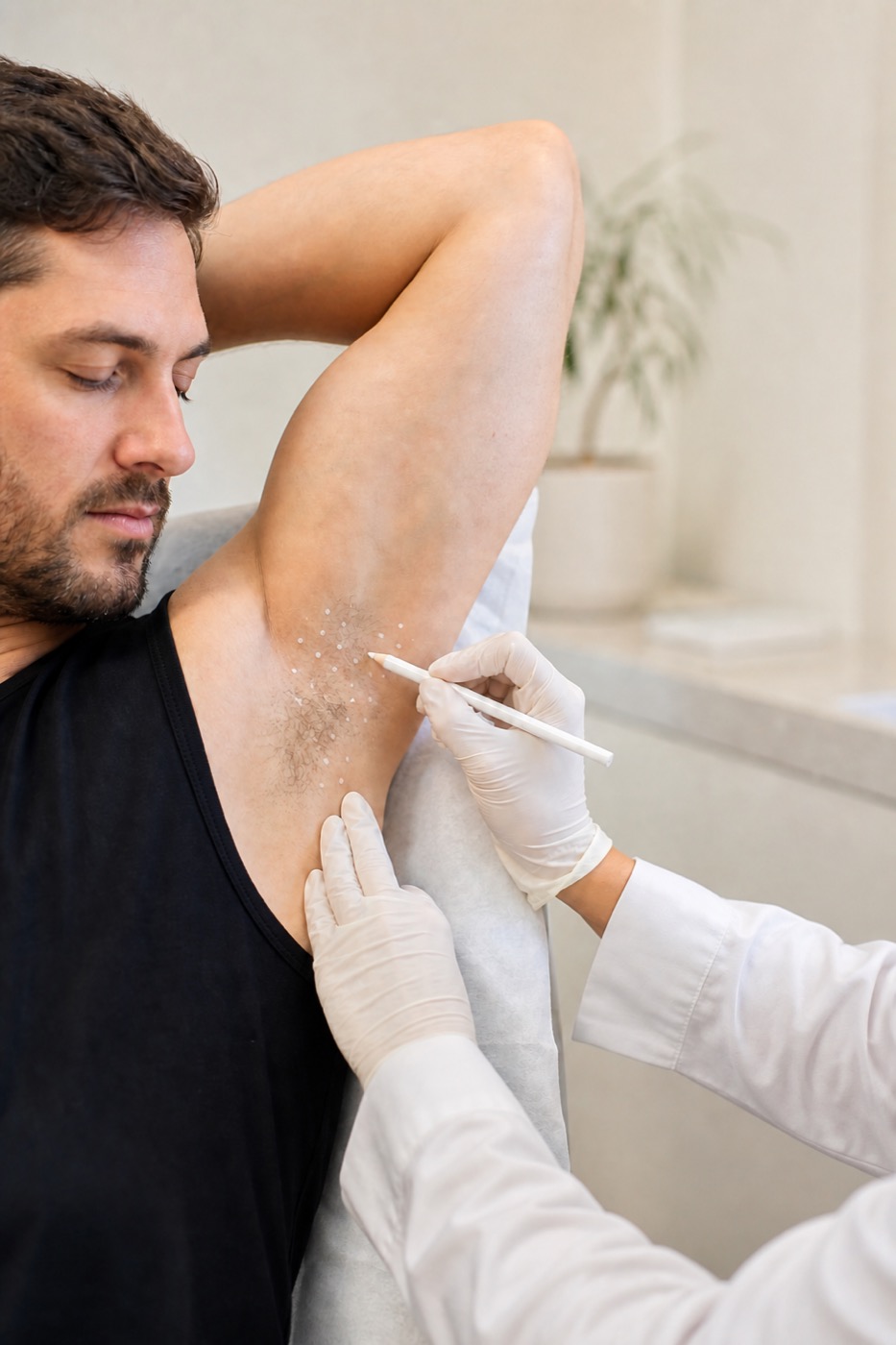
For hyperhidrosis, the affected sweating area is medically mapped and botulinum toxin is injected into multiple points in the skin. For bruxism, selection of the chewing muscles depends on the findings. Chronic migraine follows product-specific standardised injection sites across the head and neck. Dose, treatment intervals and injection depth differ by indication and product, and units from different products are not interchangeable.
Aftercare and warning signs
Temporary pain, redness, swelling or bruising can occur at injection sites. Treatment of the hands or feet may temporarily weaken nearby muscles; treatment of chewing muscles may alter chewing strength or symmetry, while migraine treatment can cause neck pain, headache or a lowered eyelid. Individual aftercare instructions should be followed. Difficulty swallowing, speaking or breathing, or pronounced or increasing muscle weakness requires immediate medical assessment.
Expected effects and risks
Symptom reduction develops gradually and is temporary; response and duration vary between individuals. Botulinum toxin does not necessarily treat the underlying cause of sweating, bruxism or migraine. In addition to local reactions, risks include unwanted weakening of nearby muscles, asymmetry, headache and, rarely, hypersensitivity or effects beyond the injection area. Repeat treatment requires renewed medical assessment, and a particular outcome cannot be guaranteed.