PRP treatment for hair and skin
PRP treatment involves drawing a small blood sample, processing it and injecting the platelet-rich plasma into the scalp or selected skin areas. Suitability depends on the clinical findings: studies suggest possible improvements in hair density in androgenetic hair loss, while evidence for aesthetic skin treatment remains limited and inconsistent.
Suitability and medical assessment
Before PRP, the type of hair loss is assessed because not every form responds to this treatment. For skin treatment, the goal, skin condition and alternatives are discussed. Depending on your history, the assessment considers blood count, clotting or platelet disorders, blood-thinning medication, infections, chronic conditions, pregnancy and previous treatments.
PRP treatment process
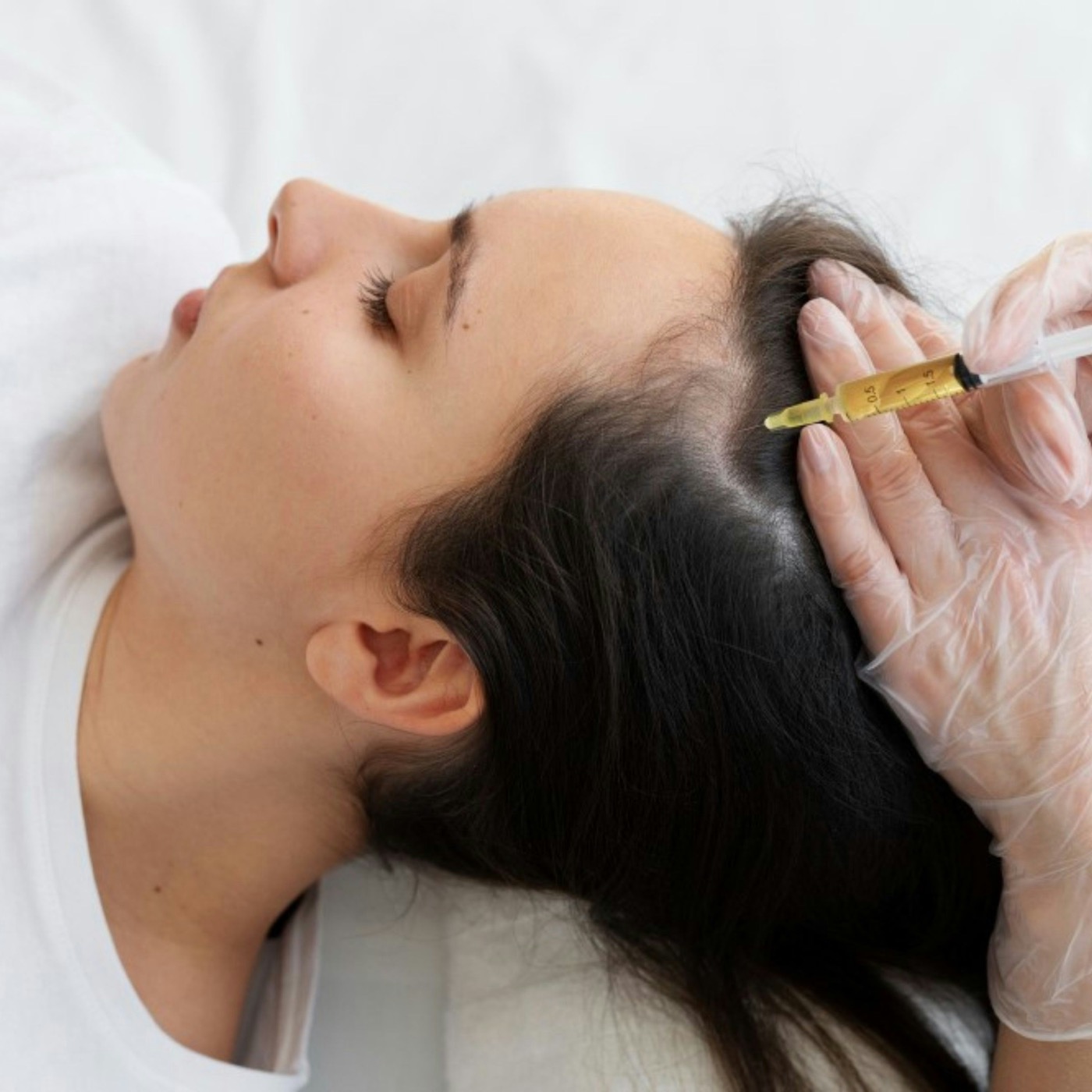
After blood is drawn, it is centrifuged to obtain a platelet-rich plasma fraction. Small amounts are then injected into the planned area under sterile conditions. Preparation, injection technique and the number of sessions are selected for the indication; PRP protocols are not uniformly standardised.
Aftercare
Temporary tenderness, redness, swelling or small bruises may occur. Avoid unnecessary touching of the treated area and follow your individual aftercare instructions. Contact the clinic promptly if pain increases or if warmth, discharge, fever or marked persistent swelling develops.
Results, evidence and risks
For androgenetic hair loss, PRP may improve hair density in some patients; response varies and maintenance sessions may be needed. Regrowth or a permanent result cannot be guaranteed. Evidence for aesthetic skin treatment is currently low-certainty. Risks include injection pain, bleeding, infection and, rarely, tissue or nerve injury; using autologous material does not make the procedure risk-free.