
Polynucleotides for skin quality
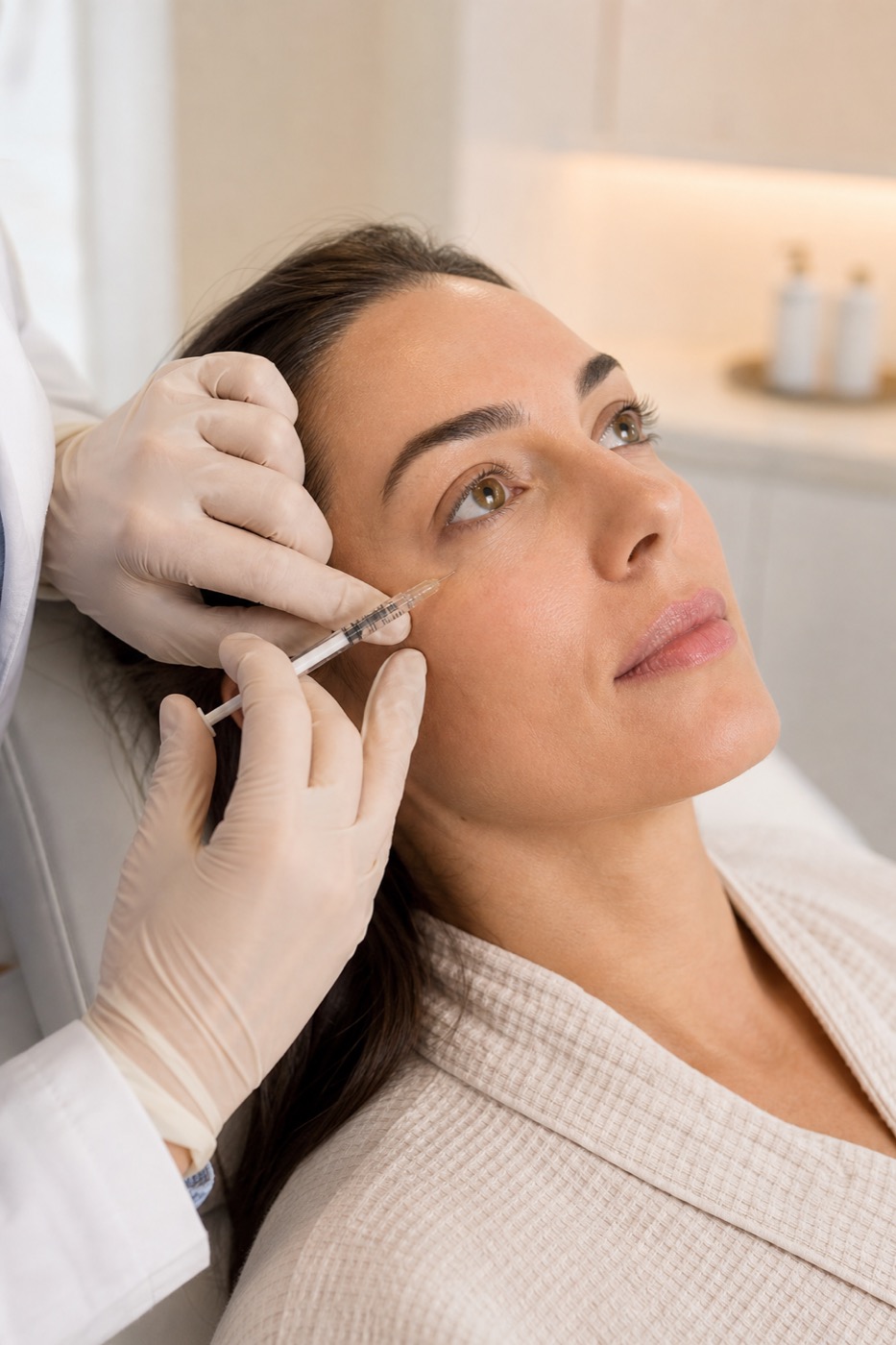
Polynucleotides are injected in small deposits into selected skin areas. Early studies suggest possible improvements in hydration, texture and fine lines, but current evidence comes from a small number of small and methodologically varied studies. Treatment is not a substitute for structural volume replacement and is planned according to the product and clinical findings.
Suitability and product assessment
The consultation covers the goal, skin condition, treatment area and exact product. Depending on the product, ingredients may be derived from marine sources, so relevant allergies must be disclosed. Previous injections, medication, relevant medical conditions, active inflammation or infection, pregnancy and breastfeeding are also considered.
Treatment process
After cleansing and, if appropriate, local anaesthesia, small amounts of the selected product are injected with a fine needle. Technique, depth, amount and number of sessions depend on the product, anatomy and goal. Small papules may be visible at injection sites immediately afterwards and usually settle.
Aftercare and warning signs
Redness, swelling, itching, tenderness or bruising are usually temporary. Care for the area as instructed and do not massage it unless advised. Increasing pain, marked discolouration, warmth, discharge, fever, visual changes or neurological symptoms require prompt medical assessment.
Results, evidence and risks
Results develop gradually and vary between individuals; a specific degree or duration of improvement cannot be guaranteed. Published studies mainly report mild, temporary reactions but are insufficient to assess rare or long-term risks reliably. Possible complications include infection, allergy, nodules, irregularities or persistent inflammation.